
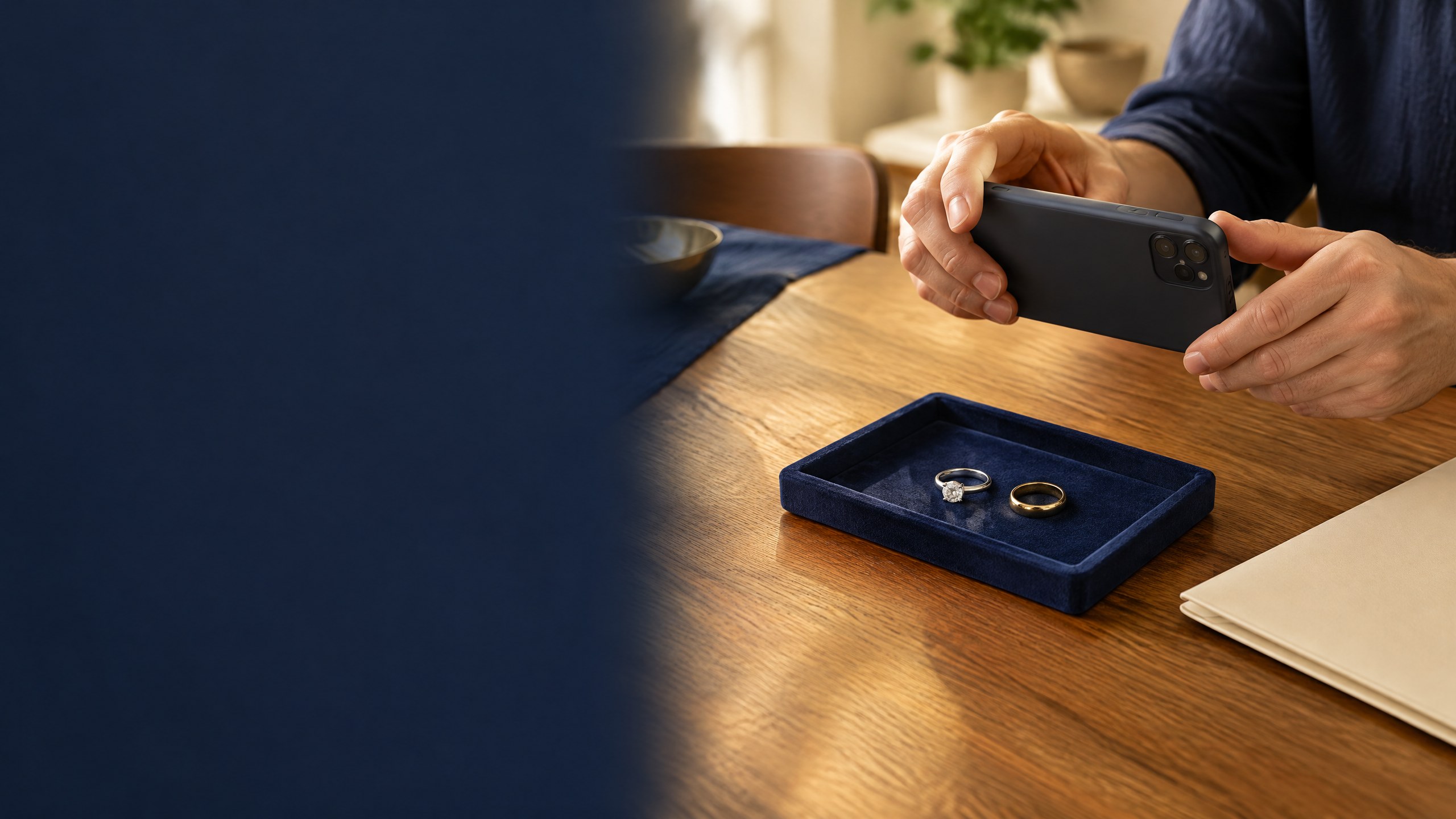
A ring sits in a drawer at home. The homeowners policy has a substantial personal-property limit. Its owner has a receipt and a photograph.
It is easy to assume those facts settle the insurance question. They do not.
Jewelry can be covered under a homeowners, condo or renters policy and still be subject to a smaller limit or restrictions on the type of loss. Additional coverage may be available, but it must be part of the actual insurance arrangement. Being inside an insured home does not guarantee protection for the ring's full value. [1] [2] [3] [5]
The useful review follows the piece itself: what happened to it, which limit applies and whether any additional coverage was actually issued.
01Home & property · Jewelry protection
A large contents limit can contain a
smaller jewelry limit
Personal-property coverage addresses belongings rather than the building. But the total limit is not necessarily available for every individual item or category of property. Florida's official homeowners toolkit specifically identifies jewelry among the items commonly subject to special limits. [2]
A sublimit is a smaller limit within a broader coverage. One important example is a limit for jewelry lost through theft. A policy may also have an individual-item limit or a total limit for a category of valuables. The actual wording determines which applies. [3] [4]
That means a single ring can raise a different question from several pieces stolen together. A limit for the entire category is not necessarily a fresh amount for each ring or necklace.
Do not assume an often-quoted jewelry limit is a Florida requirement or your own policy's limit. Find the provision in your policy and ask the insurer to explain it alongside the deductible. A deductible is the portion of a covered loss you bear under the policy's terms. [1]
02Home & property · Jewelry protection
Theft and a ring you cannot find
are different questions
Imagine two hypothetical situations. In the first, jewelry is stolen during a burglary. In the second, the owner notices a ring is missing but cannot establish what happened to it.
A theft provision does not automatically answer the second situation. Travelers' consumer guidance notes that home and renters policies may restrict an item that cannot be located without clear evidence of theft. Accidental damage, such as a chipped gemstone, can raise another coverage question. [3]
The amount insured and the cause insured are separate issues. Raising a limit does not necessarily add accidental-loss or disappearance protection. A policy must address the relevant event as well as the value of the property. [1] [4]
When comparing coverage, ask about theft, accidental loss and unexplained disappearance separately. Describe the uncertainty honestly if an item is missing. Do not label a loss as theft merely because a theft limit appears in the policy.
03Home & property · Jewelry protection
Scheduling is more than adding the ring
to an inventory
Scheduled personal property identifies particular items for coverage under a policy or endorsement. An endorsement changes policy terms. A personal articles floater is another name used for coverage of specified valuable belongings beyond ordinary policy limits. [1]
An insurer may offer an endorsement to the existing home, condo or renters policy. A separate valuables or jewelry policy may also be an option. The item descriptions, limits and covered causes depend on the arrangement selected. [3] [5]
Scheduling can provide broader protection than ordinary contents coverage, including certain accidental losses. But broader is not the same as unrestricted. Even coverage described as “open peril” has exclusions: it generally covers causes not specifically excluded by the policy. [4] [5]
A home inventory serves a different purpose. It documents belongings and can help an insurer settle a claim. Listing a ring in an inventory app does not add it to an insurance schedule, increase a limit or amend a policy. [6]
Likewise, obtaining an appraisal or asking an agent for a quote does not establish that coverage has taken effect. Confirm the issued documents and effective date with the insurer.
04Home & property · Jewelry protection
Increasing a category limit may not be the
same as scheduling
The Insurance Information Institute describes raising a limit and scheduling individual pieces as different ways to address valuable property. A higher category limit can still leave an individual-piece limit in place. Scheduling can also change the types of loss addressed. [4]
Ask what the proposed option actually changes. Is it only the dollar limit? Does it identify the particular ring? Does it add accidental loss, and which exclusions remain?
Some insurers also offer blanket coverage for a group of valuables rather than a separate schedule entry for every piece. That label alone does not establish the per-item limit or required documentation. Confirm those terms rather than treating every jewelry endorsement as identical. [3] [5]
Compare the deductible as well. Do not assume that scheduling always eliminates it, or that a separate policy necessarily has the same deductible as the home policy.
05Home & property · Jewelry protection
An appraisal supports the review; it is not
an automatic payment
A receipt can show what was purchased. An appraisal can describe the item and provide a value for a stated purpose. Insurers may require an appraisal, a recent receipt or photographs depending on the item and the coverage. [3] [5]
Ask what documentation the insurer accepts and when it needs updating. Custom pieces and heirlooms may require more detail than a general photograph. Value can change, and an old document may not reflect the current cost of replacing the piece. [3]
Then ask how a covered claim would be settled. Florida's toolkit distinguishes replacement cost, which addresses similar-kind-and-quality repair or replacement without deducting depreciation, from actual cash value, which deducts depreciation. A particular valuables policy may have its own settlement wording. [2]
An appraisal figure or a scheduled amount should not simply be assumed to produce a cash check for that figure after every loss. Have the insurer explain the applicable repair, replacement or payment provisions, along with the limit and deductible.
Insurance also cannot replace the history attached to an heirloom. Documenting its financial value and identifying appropriate coverage do not restore its sentimental significance. [3]
06Home & property · Jewelry protection
A gift or trip can
change the questions
A ring may move from the purchaser to a recipient who lives elsewhere. Before relying on existing coverage, confirm whose property is insured and whether the recipient is protected by the arrangement. Progressive's guidance specifically flags the recipient's policy status when insuring an engagement ring. Do not assume a purchase receipt alone answers that question. [5]
Travel presents another reason to review the wording. Ordinary coverage can have restrictions affecting property away from home, and additional valuables protection varies by policy. Confirm the geographic scope and any conditions before assuming the ring has the same protection everywhere. [3] [5]
A new purchase, gift or updated valuation is a useful time to revisit coverage. The review should happen before a loss, not as a way to obtain protection for something that has already happened.
07Home & property · Jewelry protection
Keep the item records
secure and usable
Photograph the piece clearly and retain its identifying description. Store available receipts and appraisal documents with the relevant schedule or endorsement. Keep secure copies that remain accessible if the original records are lost. Travelers recommends documenting valuables and storing copies securely. [3]
The NAIC's home inventory guidance supports capturing pictures and grouping belongings by category or room. It provides a practical starting point for records, not a coverage determination. [6]
SmittyShield's 12-minute home inventory Field Note explains the broader documentation exercise. Use it alongside the insurance review, not instead of one. Avoid posting valuations, policy details or storage locations publicly.
08Home & property · Jewelry protection
Eight questions before assuming the ring
is fully insured
Use this checklist to prepare a coverage conversation. Checking a box does not schedule an item, bind insurance or approve a claim.
Locate the wording.
Review the piece.
For renters, the temporary-housing Field Note addresses another part of personal protection. A landlord's building policy does not replace a review of your belongings or their special limits.
09Home & property · Jewelry protection
Review the piece before
the next loss
Ask SmittyShield to help review the protection questions for your valuable belongings. Start a coverage conversation, call (561) 606-0778, or email smithlaurent@smittyshield.org.
The ring's location tells you where it is today. Its policy wording tells you which questions to ask about tomorrow's loss.